Cut flower care
How to Care for Delphinium and Larkspur
Tall blue spikes that drop florets near ripening fruit. Keep them cool, clean and topped up for about 6 to 10 days in the vase.

- Vase life6 to 10 days
- WaterTop up daily, fresh water every 2 days
- Where to put themCool room, away from fruit, sun and heat
- PetsToxic to cats, dogs and horses (ASPCA) · Pet guide
- Care levelNeeds attention
- SeasonSummer; imported most of the year
On this page
Delphinium brings tall spikes of blue, white or purple florets to an arrangement, and with good care it lasts about 6 to 10 days in a vase. The one thing that matters most: keep it away from ripening fruit, because delphinium is very sensitive to ethylene gas and answers it by dropping its florets.
When your delphinium arrives
- Unpack the arrangement right away and set it somewhere cool, out of direct sun and away from the fruit bowl.
- Check the water level. Most of our vase arrangements sit in water, and tall delphinium spikes drink a lot, so top the vase up to near the rim with cool, clean water.
- Use the flower food packet we include. Stir it into the vase water now; it feeds the florets and slows the bacteria that block stems.
- Pick up any florets that fell in transit. A few loose petals on the table are normal for this flower and do not mean the spike is failing.
- If the spikes are set in green foam, soak the foam daily and leave them in place.
If you received a hand-tied bouquet, remove the wrapping, recut each stem about an inch at an angle with a sharp knife or clean shears, strip any leaves that would sit below the waterline, and place it in a tall, clean vase with water and the flower food. Delphinium stems are hollow and snap easily, so handle them by the lower stem, not the spike.
Everyday care
- Keep the vase full. Tall spikes and warm rooms empty a vase faster than you expect.
- Every 2 days or so, or once the water looks cloudy, change it. Rinse the vase and add fresh water with flower food.
- Recut the stems about an inch at an angle each time you change the water.
- Keep the vase out of direct sun, off radiators and away from air-conditioning vents and drafts.
- Remove any spent flowers from the arrangement as they fade. Dying blooms give off ethylene too.
Make them last longer
Ethylene is an invisible gas released by ripening fruit, aging flowers, cigarette smoke and car exhaust. Most flowers tolerate a little of it. Delphinium and its cousin larkspur do not: the florets, especially the unopened ones near the tip, let go and fall. So keep the vase well away from bananas, apples, tomatoes and the kitchen fruit bowl, and take out wilting flowers from the rest of the arrangement promptly.
Clean water matters just as much. Bacteria in dirty water block the stems, and a blocked delphinium stem cannot hold up a heavy spike. A clean vase, fresh water and the flower food packet do more for vase life than any trick. Skip home recipes like sugar, soda or aspirin; they feed bacteria or do nothing useful.
Coolness helps. A spot in the coolest room of the apartment, especially at night, slows the florets down. In winter, keep delphinium well away from steam heat.
Because the stems are hollow, give tall spikes a vase deep enough to support them. If a stem creases or cracks, cut it below the damage and use the top in a shorter vase. For more general tips, see our guide to making cut flowers last.
Common problems
Why are the florets dropping?
Almost always ethylene or warmth. Move the vase away from fruit, smoke and heat, remove any fading flowers nearby, and change the water. A handful of dropped florets is normal as a spike ages; a sudden shower usually points to a nearby source of ethylene.
Why is the spike drooping at the top?
The stem is not getting enough water, either because the vase ran low or the stem is blocked. Top up the water, recut the stem an inch at an angle, and put it back into fresh water with flower food. Keep it cool for a few hours. If the tip is firm but curving upward or toward a window, that is not wilting. Delphinium spikes bend against gravity and toward light. Keep the vase upright and give it a quarter turn each day.
Why are the leaves turning yellow?
Delphinium leaves yellow easily. Pull off yellow leaves and any leaves sitting in the water, then change the water. The flowers usually carry on fine.
The top buds never opened. Is something wrong?
The last few buds at the tip of a spike often stay closed in a vase. That is normal. If the whole spike looks poor within a day or two of delivery, contact us within 3 days with your order number, the recipient's name and a photo, as our refund policy explains, and we'll take a look and make it right where we can.
Good to know
- Pets: the ASPCA lists larkspur (Delphinium species), which includes delphinium, as toxic to cats, dogs and horses. Keep the vase out of reach, and if you think a pet chewed any part of it, call your vet or the ASPCA Animal Poison Control Center. See our pet-safe flowers guide.
- Lilies and cats: Cinderella and Spring Time also contain lilies, which are life-threatening to cats, even the pollen or the vase water. If you have a cat, ask us to make them without lilies (write "no lilies" in your cart's order note, or call us) or keep these arrangements out of your home, and read our lily care guide.
- Scent: delphinium has little or no fragrance, so it sits easily next to fragrant flowers.
- Where you'll see it: blue delphinium appears in designs such as White Fire, with white hydrangea, hot pink roses and ranunculus, and it can show up in mixed arrangements like Cinderella and Spring Time.
- Delphinium or larkspur: florists use both names. Larkspur is the finer, looser annual cousin; delphinium has denser spikes. Care is the same.
- Season: delphinium is a summer garden flower, but imported stems make it available most of the year. Call the shop to ask what we have in.
- Meaning: blue delphinium is often given to suggest dignity and grace.
Our designs with delphinium
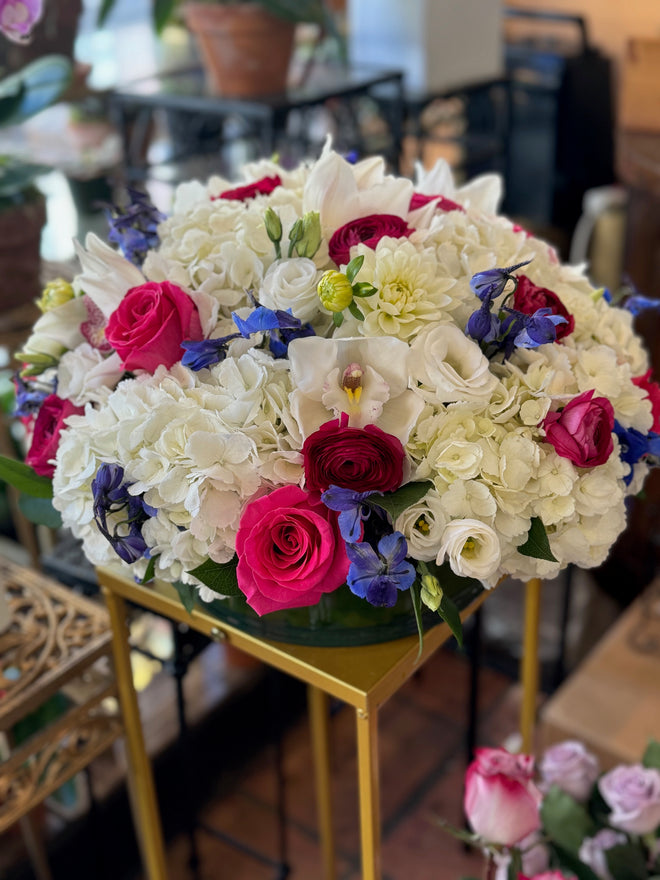
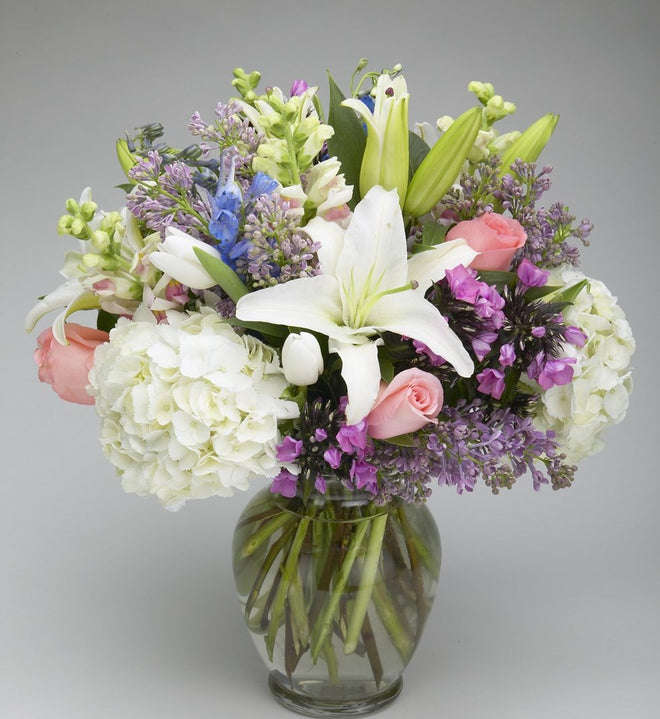
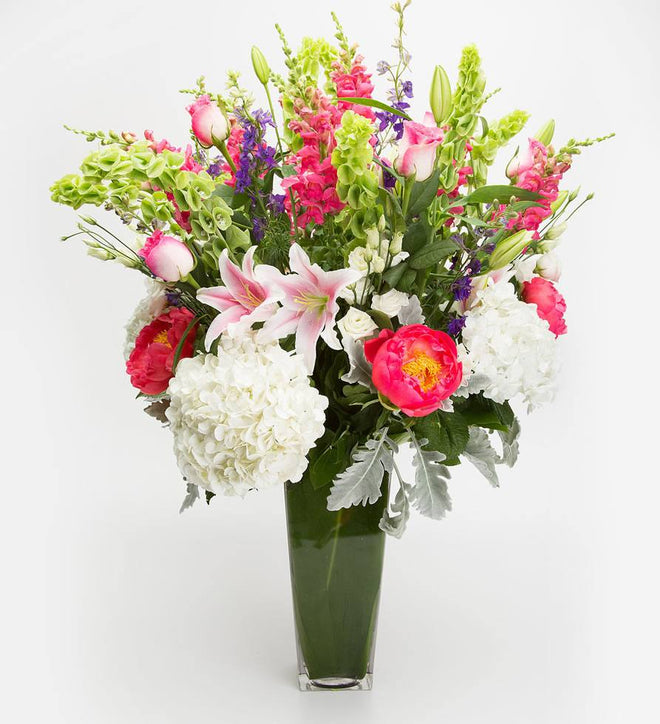
Something not right?
If there's a problem with your order, contact us within 3 days of delivery or pickup with your order number and a photo, and we'll take a look. Call 212-289-1677 · Refund policy
Keep reading
-

Cut flowers
Lilacs
Lilacs are fragrant but short-lived in a vase. Strip the leaves, recut the woody stems, keep the water cool and topped up, and give them a cool room.
-

Cut flowers
Roses
Daily water, clean cuts and a cool spot keep roses going for days. Plus guard petals, thorns, opening buds and the fix for bent neck.
-

Cut flowers
Hydrangeas
Hydrangeas are thirsty and drink through their petals too. Keep the vase full, mist lightly, and soak a wilted head in water to bring it back.


