Cut flower care
How to Care for Cut Lilies
Lilies open bud by bud for a week or more. Pull the pollen anthers, remove spent blooms, keep them cool, and keep them away from cats.

- Vase life7 to 14 days
- WaterTop up daily, fresh water every 2 days
- Where to put themCool room, away from sun, heat and fruit
- PetsToxic to cats (ASPCA), even pollen and vase water · Pet guide
- Care levelEasy
- SeasonYear-round
Oriental and Asiatic lilies are the long-distance runners of a vase: a stem with three or four buds keeps opening new flowers over a week or more, so a lily arrangement often lasts 7 to 14 days with good care. Two things matter most. Pull the pollen-covered anthers as each flower opens, and keep lilies away from cats: every part, even the pollen and vase water, can cause fatal kidney failure in cats. If a cat may have touched them, call your vet or the ASPCA Animal Poison Control Center right away (see Good to know).
When your lilies arrive
- Unwrap the arrangement and set it in a cool spot, out of direct sun and away from radiators and heating vents.
- Check the water level. Our vase arrangements sit in water, so top the vase up to within an inch or so of the rim with cool, clean water.
- Stir in the flower food packet we include. It feeds the buds so they can open fully and helps keep the water clean.
- Look at any flowers that are already open. If the anthers (the six rust or orange tips on thin stalks in the center) are dusty with pollen, remove them now (see below).
- Leave the closed buds alone. They are meant to arrive tight and will open over the next few days.
Received a wrapped bouquet with lilies, such as Pink Passion? Pick a tall vase that supports the stems, fill it with cool water and the flower food, cut about an inch off each stem at an angle, strip any leaves that would sit below the water, and arrange. Lilies set in green foam need the foam kept soaked; leave the stems where they are.
Everyday care
- Top up the water every day. Lilies are thirsty, and a big open bloom drinks fast.
- Change the water every 2 days or so, or sooner if it turns cloudy. Rinse the vase and re-trim the stems by about half an inch each time.
- Keep leaves out of the water. Submerged leaves rot and feed bacteria that block the stems.
- Keep the vase cool and out of drafts. A sunny south window, a radiator in winter or the top of a warm appliance will open buds fast and shorten the show.
- Keep lilies away from the fruit bowl. Ripening fruit gives off ethylene gas, and lilies are sensitive to it: buds can dry up and fail to open.
For the full routine that works for every vase, see our guide to making cut flowers last.
Make them last longer
Remove the anthers as each flower opens. As soon as a bloom opens, pinch each anther off with a tissue or a paper towel and pull it gently away, or snip it off with small scissors. Do it before the pollen turns loose and powdery. It keeps the petals clean, protects your tablecloth and clothes, and cuts down on loose pollen in the house.
Remove spent blooms. Each lily flower lasts several days. When one fades and droops, snap it off where it joins the stem. The arrangement looks fresher and the buds above have room to open.
Trim yellow leaves. A few yellow leaves after a week are normal; pull them off.
Keep it cool at night. If the room gets warm, moving the vase to the coolest spot at night slows the opening and stretches the show.
Common problems
Why aren't my lily buds opening?
Give them time: buds open one or two at a time over several days, and tight green buds take longest. Make sure the water is fresh and has the flower food in it, and move the vase away from fruit, cold drafts and hot radiators. The smallest buds at the very top sometimes never open, which is normal. If something looks wrong with a fresh delivery, call or email us within 3 days of delivery or pickup with your order number, the recipient's name and a photo (see our refund policy), and we'll take a look and make it right where we can.
I got pollen on my clothes. What do I do?
Don't rub it and don't wet it first; both push the pigment into the fibers. Lift the pollen off with the sticky side of tape, or flick it away with a soft dry brush or pipe cleaner. If a faint mark is left, lay the fabric in sunlight for a few hours, which helps fade it, then wash it in cold water as usual. For pollen on petals, brush it off with a dry tissue rather than wiping.
Why are the flower edges turning brown?
Usually heat, dry air or age. Older blooms brown first; remove them. If new flowers brown quickly, the room is likely too warm or the water too low. Steam heat and strong sun dry lilies out.
Why is the water cloudy and smelly?
That is bacteria. Empty the vase, wash it with warm soapy water, refill with fresh water and flower food, and re-trim the stems. Pull out any leaves or petals floating in the water.
Good to know
Lilies and cats: a serious warning. True lilies (Oriental, Asiatic, Easter and tiger lilies) and daylilies are toxic to cats, and the ASPCA lists them as a cause of kidney failure. Every part is dangerous, including the pollen and the vase water, and a very small amount can be fatal. If you have a cat, do not keep lilies in the home. Sending to a cat owner? Pick a lily-free design, or ask for "no lilies" in your cart's order note. If a cat may have chewed a leaf, licked pollen off its fur or drunk the vase water, call your vet or the ASPCA Animal Poison Control Center at (888) 426-4435 (a fee may apply) right away; early treatment matters. The ASPCA lists true lilies as non-toxic to dogs; a dog that eats one may still get a mild upset stomach, and gloriosa lilies and lily-of-the-valley are dangerous to dogs as well. Our pet-safe flowers guide has cat-friendly alternatives.
Calla lilies are a different flower. Despite the name, callas are not true lilies and need different care; see our calla lily care guide.
Scent. Oriental lilies are strongly fragrant, and the scent builds as more flowers open. Asiatic lilies have little or no scent. In a small bedroom or a hospital room a single stem of Oriental lily can be a lot, so pick a roomy spot.
What you may see in our arrangements. White lilies in Cinderella, Angelica, Lullaby and our tall all-white Lilies arrangement; pink lilies in Milos and Pink Passion; pink and white lilies in Spring Time; orange lilies in Ivy Bowl; yellow lilies in Kaleidoscope. White lilies also appear in sympathy designs. Lilies are grown year-round; call the shop to ask about a color.
Our designs with lilies
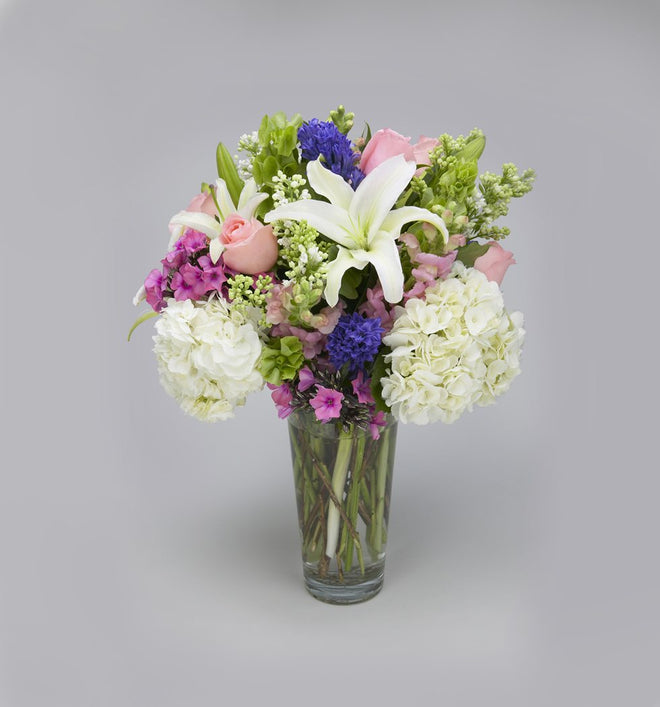
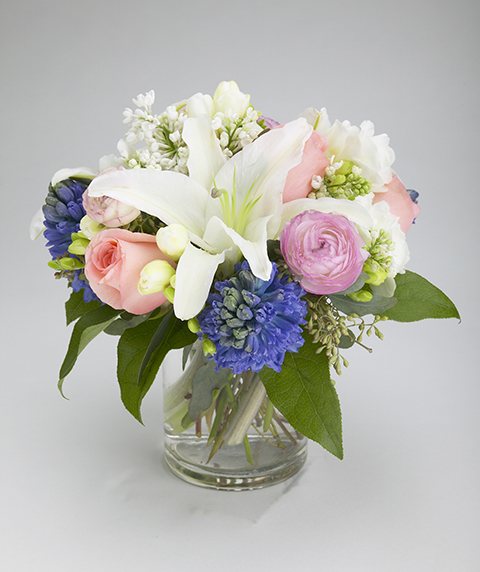
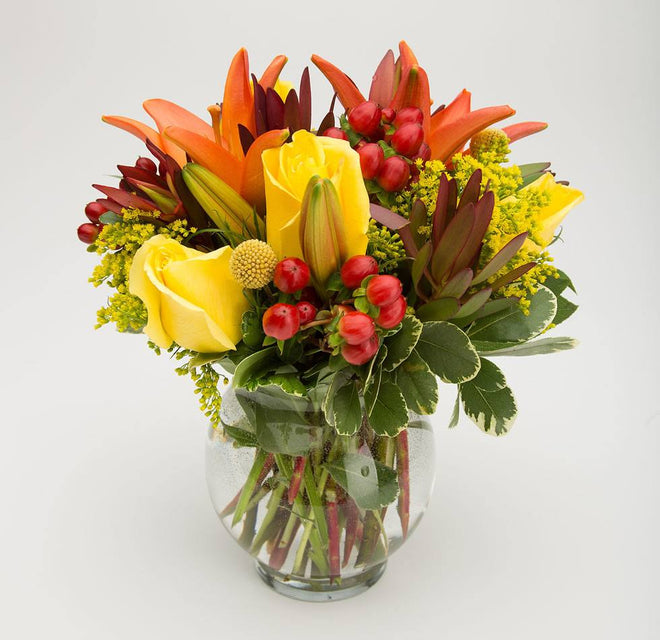
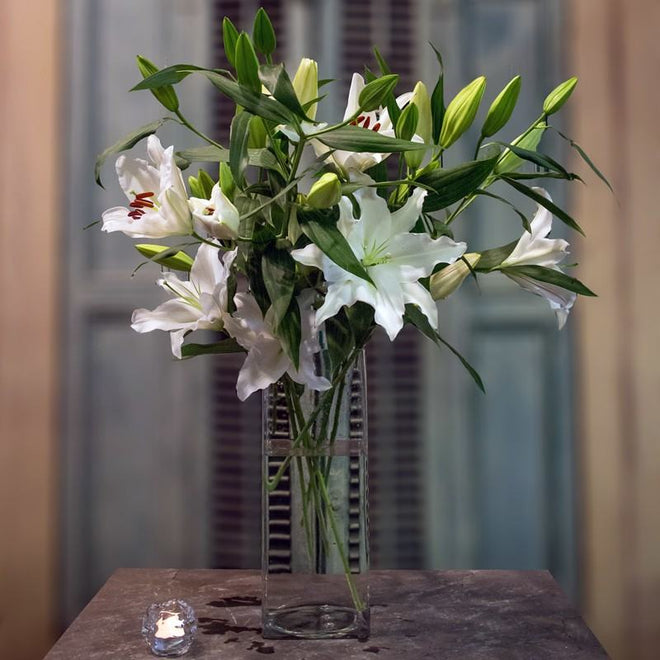
Something not right?
If there's a problem with your order, contact us within 3 days of delivery or pickup with your order number and a photo, and we'll take a look. Call 212-289-1677 · Refund policy
Keep reading
-

Cut flowers
Lisianthus
Lisianthus looks delicate but lasts. Keep the vase full, use the flower food so the buds open, and snip off each bloom as it fades.
-

Cut flowers
Tulips
Tulips keep growing after cutting and lean toward the light. Keep them cool, turn the vase daily and top up the water, and they usually last 5 to 10 days.
-

Cut flowers
Peonies
Tight buds that open fast in warmth and slowly in a cool room. How to pace your peonies, support heavy heads and keep them fresh for 5 to 8 days.


