Cut flower care
How to Care for Calla Lilies
Callas have soft, water-filled stems. Keep the water clean, trim the stems, pull any slimy ones, and handle the blooms as little as possible.

- Vase life5 to 10 days
- WaterTop up daily, fresh water every 2 days
- Where to put themCool room, away from sun, heat and fruit
- PetsToxic to cats and dogs (ASPCA) · Pet guide
- Care levelEasy
- SeasonYear-round (garden: late spring)
Callas are the smooth, trumpet-shaped flowers on long, bare stems that give an arrangement its clean lines. With good care they usually stay fresh for 5 to 10 days. The one thing that matters most: their stems are soft and full of water, so keep that water clean and remove any stem that turns slimy.
When your callas arrive
- Carry the vase by its base and set it down gently. Calla stems and blooms bruise easily, so try not to squeeze them or let them knock against a wall or door frame.
- Check the water. Our vase arrangements sit in water, so top the vase up with cool, clean tap water and stir in the flower food packet we include.
- Choose a spot in a comfortable room, out of direct sun, away from radiators, heat vents and air-conditioning drafts, and not next to the fruit bowl.
- A few calla designs sit in green foam; keep it soaked and leave the stems in place.
If you received a hand-tied bouquet with callas, unwrap it, cut about an inch off every stem at an angle with a sharp knife or clean shears, and put it straight into a clean vase of water with the flower food. Handle calla stems as little as you can while you work.
Everyday care
- Check the water every day and top it up. Mixed arrangements drink more than you might expect.
- Every 2 days or so, or sooner if the water turns cloudy, pour it out, rinse the vase and refill with fresh, cool water (add flower food if you have some left; clean water matters most).
- When you change the water, trim a little off each stem with a clean, sharp blade. Don't mash or crush the stems.
- Look at the stem ends each time. Any calla stem that feels slimy or mushy should come out, or be trimmed back above the soft part, before it fouls the water for everything else.
- Pull out any other flowers that have faded so the rest of the arrangement stays fresh.
Make them last longer
Watch the water depth. Calla stems are mostly water and soften when they stand in deep, stale water. If your callas are in a mixed arrangement, keep the water at the level the other flowers need and simply change it often. If you put callas in a vase on their own, a few inches of fresh water is plenty, as long as you check it daily.
Use the flower food. It helps keep bacteria down in the water, and some florists find it also reduces the splitting and curling that calla stem ends can do.
Keep them cool and away from fruit. Warmth shortens vase life, and ripening fruit gives off ethylene gas, which ages many flowers. A cooler room at night helps.
Don't fuss with the blooms. The smooth, petal-like part of a calla shows every fingerprint and knock as a brown mark. Leave the flowers in place once they are arranged, and don't mist or splash the blooms: water sitting on them can lead to gray mold spots.
Our guide to making any cut flowers last longer covers the basics that apply to every vase.
Common problems
Why are the stem ends splitting and curling?
This is common with callas. The soft stem takes up water quickly and the cut end can swell, split and curl back. It is not a sign the flower is dying. Trim off the curled part with a clean cut when you change the water, and keep the water fresh.
Why is a stem soft and slimy at the bottom?
Thick calla stems break down in water faster than most, especially in warm or cloudy water. Take that stem out, cut back above the soft part if the rest is firm, rinse the vase and refill with fresh, clean water.
Why is my calla bending or drooping?
A soft stem can bend where it was bruised, or droop when it cannot drink because the end is blocked or rotting. Recut the stem above any soft or damaged section and put it back in fresh water. If it has kinked sharply, that bloom will not straighten, but you can cut the stem short below the kink and stand it in a small bud vase or glass of fresh water.
Why are there brown spots or brown tips on the flowers?
Brown marks on the smooth part of the bloom usually come from bruising or handling, and the tips can brown as the flower ages or sits somewhere warm and dry. Move the vase somewhere cooler, out of the sun. If a calla arrives badly bruised, contact us within 3 days of delivery with your order number, the recipient's name and a photo, as described in our refund policy, and we'll take a look and make it right where we can.
Good to know
- Pets: the ASPCA lists calla lily as toxic to cats and dogs. It contains insoluble calcium oxalate crystals, which can cause mouth irritation, drooling, vomiting and trouble swallowing. Keep the vase out of reach, and if you think a pet has chewed one, call your vet or the ASPCA Animal Poison Control Center. See our pet-safe flowers guide for more.
- Not a true lily: callas (Zantedeschia) belong to the arum family, not the lily family. The showy part is a single curled bract called a spathe, wrapped around a finger-like spadix that holds the tiny true flowers. True lilies (Lilium) and daylilies are a different story: they are life-threatening to cats, even a little pollen or a sip of the vase water, so keep them out of any home with a cat; see our lily care guide.
- Sap: calla sap can stain fabric, and the mark may only show up after washing, so keep cut stems off tablecloths and clothes.
- Scent: callas have little or no fragrance, which makes them easy to keep in a small apartment, office or bedroom.
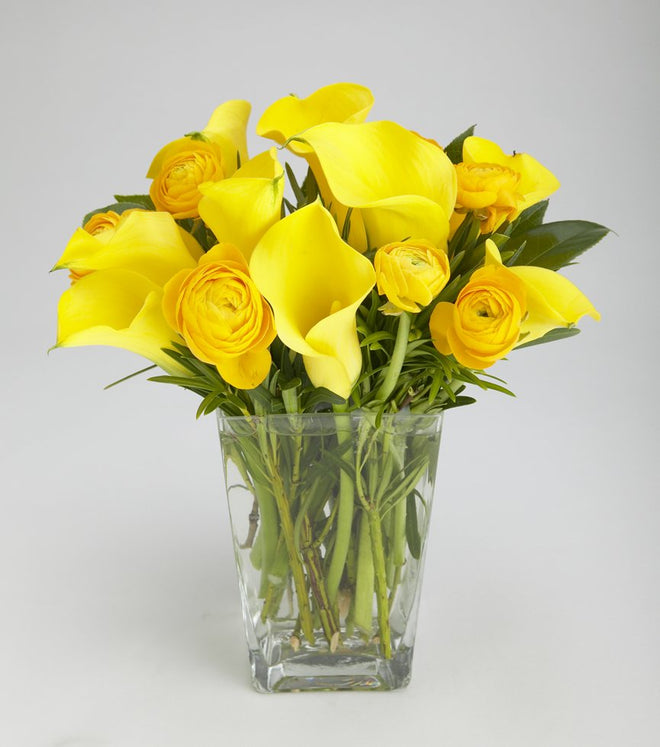
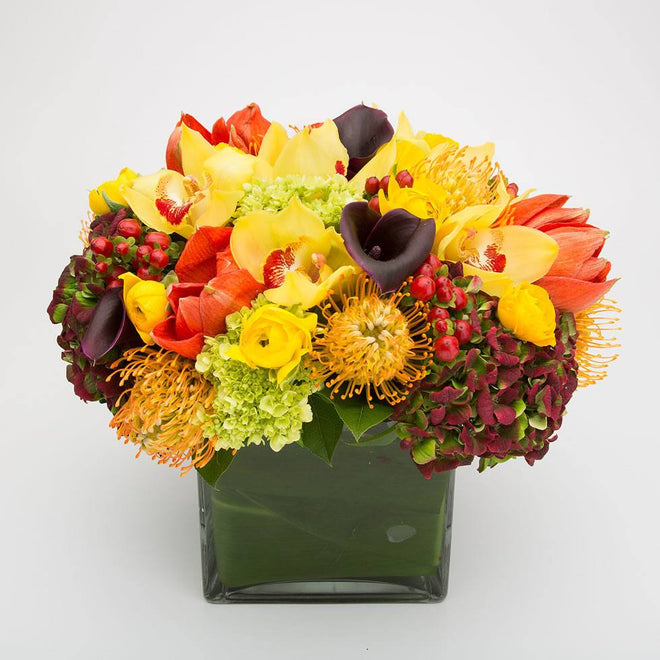
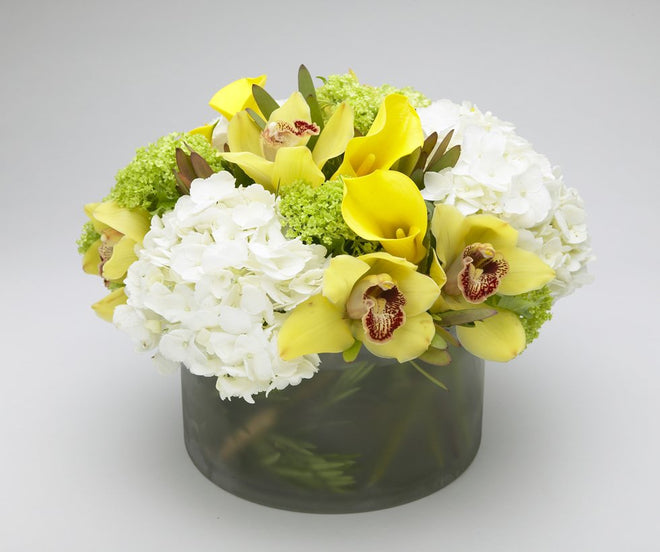
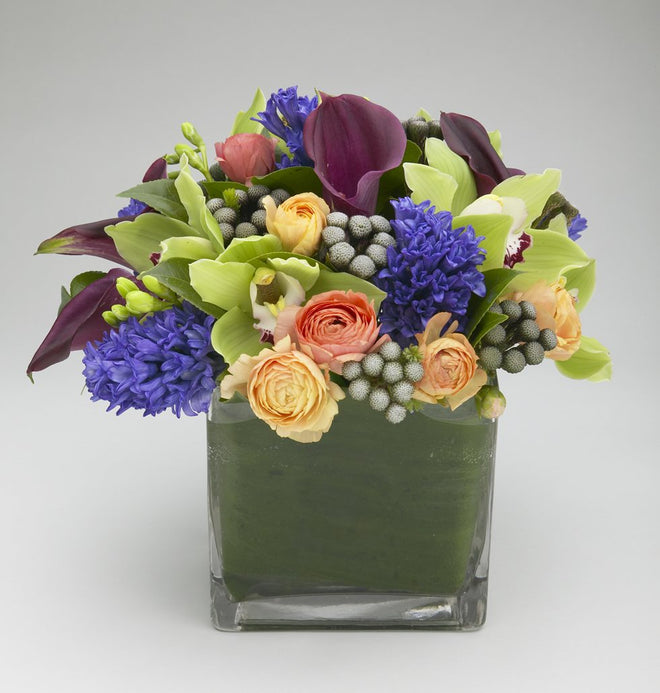
- Colors you may see from us: yellow callas are the most common in our designs, along with plum, burgundy and rust shades, set with roses, hydrangea, hyacinth, tulips and cymbidium orchids.
- Season: garden callas bloom in late spring and early summer, while cut callas are grown for florists most of the year. For what we have this week, call the shop.
- Meaning: callas are often chosen for their clean, elegant shape, which is why you see them at weddings as well as in sympathy flowers.
Our designs with calla lilies
Something not right?
If there's a problem with your order, contact us within 3 days of delivery or pickup with your order number and a photo, and we'll take a look. Call 212-289-1677 · Refund policy
Keep reading
-

Cut flowers
Lilies
Lilies open bud by bud for a week or more. Pull the pollen anthers, remove spent blooms, keep them cool, and keep them away from cats.
-

Cut flowers
Lisianthus
Lisianthus looks delicate but lasts. Keep the vase full, use the flower food so the buds open, and snip off each bloom as it fades.
-

Cut flowers
Tulips
Tulips keep growing after cutting and lean toward the light. Keep them cool, turn the vase daily and top up the water, and they usually last 5 to 10 days.


