Cut flower care
How to Care for Lisianthus
Lisianthus looks delicate but lasts. Keep the vase full, use the flower food so the buds open, and snip off each bloom as it fades.

- Vase life10 to 14 days
- WaterTop up daily, fresh water every 2 days
- Where to put themCool, bright spot out of sun, drafts and fruit
- PetsNon-toxic per ASPCA; not in its plant list
- Care levelEasy
- SeasonYear-round (garden: summer)
On this page
Lisianthus looks delicate, with ruffled, silky petals that people often mistake for roses, but it is one of the longest-lasting flowers we put in a vase. With good care the stems usually last 10 to 14 days, and each one carries several blooms and buds that open in turn. The thing that matters most is water: lisianthus drinks a lot, so never let the level drop.
When your lisianthus arrive
- Check the water level first. Most of our arrangements sit in water in the vase, and after a trip across town the level may have dropped. Top it up with cool, clean tap water.
- Add the flower food packet we include. It feeds the buds so they can open and helps keep the water clean.
- Pick a spot that is cool and bright but out of direct sun, away from radiators, heating vents, air-conditioning drafts and the fruit bowl.
- Handle the stems, not the flowers. The petals are thin and crease easily, so move the vase by its base and avoid squeezing the blooms.
- For the odd design in green foam, keep the foam wet and the stems where they are.
Got a hand-tied bouquet, such as one with purple lisianthus? It is wrapped and meant for your own vase. Fill a clean vase with cool water and the flower food, remove the wrap and any rubber band, strip leaves that would sit below the water, cut about an inch off each stem at an angle with a sharp knife or clean pruners, and put the flowers straight in.
Everyday care
- Lisianthus is thirsty, and wilting often starts when the level drops, so refill the vase daily.
- Every 2 days or so, or when the water turns cloudy, change it. Rinse the vase, refill with fresh water, and trim a little off each stem as you go. Use the flower food packet we include with the first fill. If you have more flower food, add it at each change.
- Remove any leaf that slips below the waterline. Leaves in the water rot and feed bacteria that block the stems.
- Keep the vase upright and in one place. Stems lean toward light, and the small side stems bend if the flowers are laid on their side.
- Keep them cool. Steam heat in winter and a sunny south window in summer both shorten their life.
For the basics that apply to every vase, see our guide to making cut flowers last.
Make them last longer
Each lisianthus stem is really a small branch: a few open flowers at the top and a line of buds below. Florists buy them with one to three blooms open, and the rest open over the following days. Help them along like this:
- Snip off spent flowers. When a bloom goes papery or brown, cut its little stem where it meets the main stem. The arrangement looks fresher, and fading petals are where gray mold likes to start.
- Use the flower food. Its sugar helps the buds open and color up, so mix the packet we include into the water. When it runs out, clean water changed often is the next best thing. Skip homemade sugar or soda mixes, which feed bacteria.
- Keep ripening fruit away. Lisianthus is slightly sensitive to ethylene, the gas that bananas, apples and other fruit give off as they ripen. It makes open flowers age faster.
- Don't mist the blooms. Water sitting on the petals can spot them and invites mold. Water belongs in the vase.
- Give them room. Crowded blooms rub and bruise. If you move stems into your own vase, leave a little space between the flower heads.
Common problems
Why are my lisianthus drooping?
Almost always thirst. Check the water first and top it up. Then take the stems out, cut about an inch off each one under running water or straight into fresh water, and return them to a clean vase with flower food. They should perk up within a few hours. If a bloom still hangs, it may simply be at the end of its life. For more rescue steps, read our guide to reviving drooping flowers.
Why aren't the buds opening?
The smallest, green buds at the bottom of a stem often never open in the vase, and that is normal. The fatter, colored buds should open over several days if they have flower food and stay cool. Warm rooms, a missed water change and ripening fruit nearby all hold them back.
Why do some petals have brown marks or creases?
Lisianthus petals bruise easily when they are pressed or rubbed, and they spot when water sits on them. Snip off a damaged bloom so the others show. A single mark does not mean the whole stem is failing.
A side stem bent over. Can I straighten it?
Unfortunately not. Once the small flower stems bend, they don't straighten again when the vase is set upright. Cut that bloom off and float it in a small glass. It will look lovely on a desk or night table.
If your arrangement arrives damaged or wilted, contact us within 3 days of delivery or pickup with your order number and a photo, as our refund policy explains, and we'll take a look and make it right where we can.
Good to know
- Pets: the ASPCA names lisianthus (Eustoma) as a non-toxic flower for bouquets, although it does not have its own entry in the ASPCA plant database. Any plant can upset a pet's stomach, and many of our designs mix lisianthus with other flowers, so check every flower in the vase. If a pet eats part of an arrangement, call your vet or the ASPCA Animal Poison Control Center. Our pet-safe flowers guide covers the rest.
- Scent: lisianthus has little or no fragrance, which makes it an easy choice for small apartments, offices and anyone sensitive to strong scents.
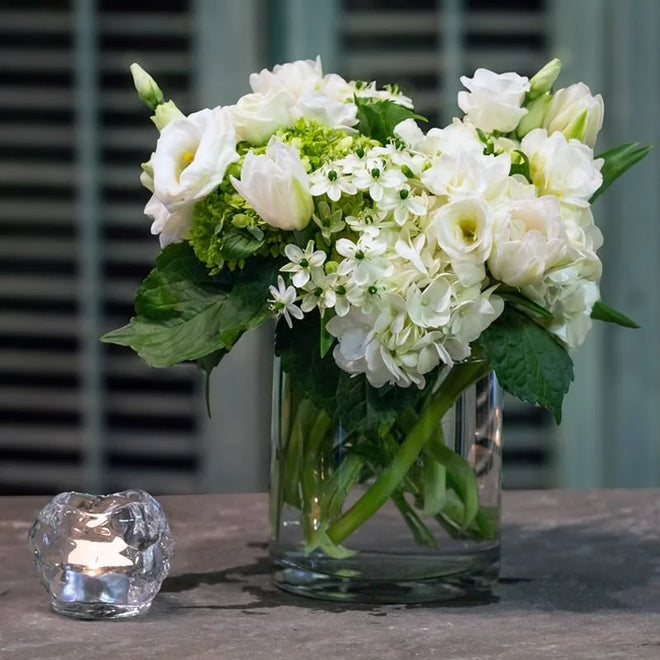
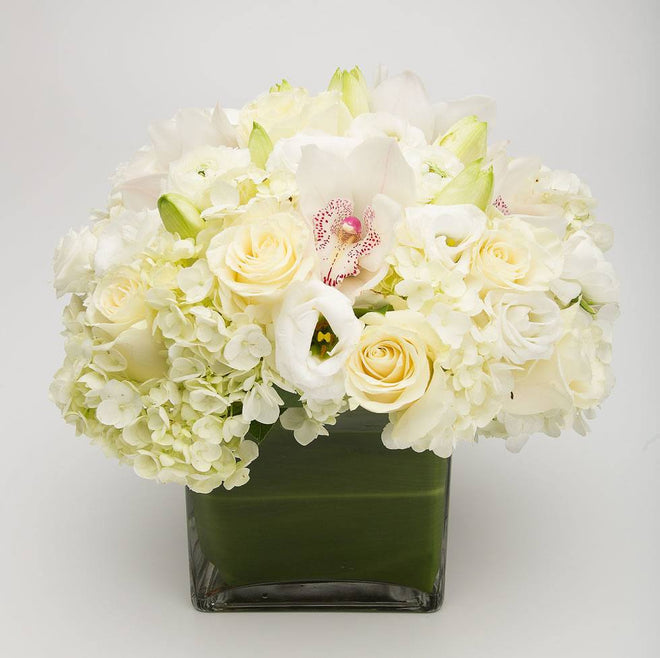
- Colors you may see: in our arrangements it is usually white, mixed with white roses and hydrangea, and sometimes purple in bouquets.
- Season: in the garden it is a summer flower, but greenhouse-grown stems are available most of the year. To ask what we have this week, call the shop.
- Also called: Eustoma or prairie gentian.
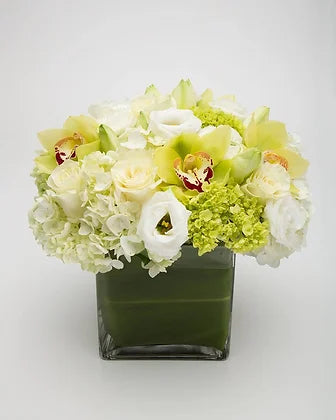
Our designs with lisianthus

Something not right?
If there's a problem with your order, contact us within 3 days of delivery or pickup with your order number and a photo, and we'll take a look. Call 212-289-1677 · Refund policy
Keep reading
-

Cut flowers
Tulips
Tulips keep growing after cutting and lean toward the light. Keep them cool, turn the vase daily and top up the water, and they usually last 5 to 10 days.
-

Cut flowers
Peonies
Tight buds that open fast in warmth and slowly in a cool room. How to pace your peonies, support heavy heads and keep them fresh for 5 to 8 days.
-

Cut flowers
Hyacinths
Heavy, fragrant spikes on soft, juicy stems. How to keep hyacinths upright, clean and drinking for 5 to 7 days in the vase.


