Cut flower care
How to Care for Hyacinths
Heavy, fragrant spikes on soft, juicy stems. How to keep hyacinths upright, clean and drinking for 5 to 7 days in the vase.

- Vase life5 to 7 days
- WaterTop up daily, fresh water every 2 days
- Where to put themCool room, out of sun, heat and drafts
- PetsToxic to dogs, cats and horses (ASPCA) · Pet guide
- Care levelModerate
- SeasonLate winter to spring
On this page
Hyacinths are the flower you smell before you see: dense spikes of little star-shaped florets on thick, juicy stems, with a sweet scent that can fill a whole apartment. With good care a cut hyacinth usually lasts about 5 to 7 days in the vase. The one thing that matters most is the stem: keep it upright, in clean water, and trim it gently.
When your hyacinths arrive
- Unpack the arrangement right away and set it somewhere cool, out of direct sun. If a doorman or an office lobby held the delivery for a while, check the water as soon as it reaches you.
- Look at the water level. Most of our vase designs sit in water, not foam, so top the vase up with cool tap water.
- Add the flower food packet we include with every order, mixed as the packet directs.
- Leave the design alone for the first day. Hyacinth stems are soft and snap or crease if they are pulled in and out.
- In a foam design, water the foam daily so it stays soaked.
In our designs hyacinths are usually an accent among roses, callas, tulips or hydrangea, so you care for the whole vase together. If you have loose hyacinths for your own vase, pick a tall, fairly narrow one that holds the heavy heads upright, fill it with cool water and flower food, and shave only a thin slice off the bottom of each stem. Freshly cut hyacinths ooze a slime that can shorten the life of other flowers, so if you plan to mix them with other stems, stand them in their own water for a few hours first, then move them into the shared vase without cutting them again.
Everyday care
- Keep the vase topped up daily. Mixed arrangements drink a lot in warm, dry rooms.
- Change the water every 2 days or so, or sooner if it looks cloudy or feels slippery, and add fresh flower food.
- When you change the water, shave just a thin slice off the very end of each stem with a clean, sharp knife or scissors. Keep as much of the firm white base as you can; that is where hyacinths drink.
- Keep the vase away from radiators, steam heat, sunny south windows and the direct blast of an air conditioner.
- Keep it away from the fruit bowl. Ripening fruit gives off ethylene gas, which ages cut flowers faster.
- Turn the vase every day or two so the heavy heads don't all lean toward the window.
Make them last longer
Trim hyacinths lightly. The bottom of each stem is firm and white, and florists leave that white base on, because it is where a hyacinth takes up water. Shave only a thin slice off the very end. A clean cut matters more than a long one.
Freshly cut hyacinth stems can ooze a clear, slippery sap. That is normal, but it clouds the water and feeds bacteria, so change the water a little more often than you would for roses alone, and rinse the vase before you refill it. If a stem end feels slimy, rinse it and shave off only the slimy tip.
Support the heads. A full spike of florets is heavy for its stem, and a hyacinth that flops sideways can crease and stop drinking. Let it rest against its neighbors or the rim of the vase, and pick a vase that is at least half the height of the stems if you are arranging your own.
Cool is their friend. In a cool room the florets open gradually from the bottom of the spike upward and the scent stays pleasant rather than heavy. Remove any faded flower so it doesn't cloud the water.
Skip the home remedies: sugar, soda, aspirin, pennies and bleach are no substitute for the flower food packet. For the routine that works for every flower in the vase, see our guide to making cut flowers last.
Common problems
Why is my hyacinth bending or flopping over?
The flower head is heavy and the stem is soft, so some leaning is normal, especially toward a bright window. Top up the water, turn the vase, and let the stem rest against a sturdier flower. If it has creased sharply, the stem above the crease can no longer drink well, so move it to a small, narrow glass of its own where the head can rest on the rim and it can still drink through its base.
Why are the florets turning brown?
The lowest florets open first and fade first, so a little browning at the bottom of the spike after several days is normal. Browning all over at once usually means heat, sun or dirty water. Move the vase somewhere cooler, change the water and flower food, and pinch off the spent florets.
Why is the water cloudy and the stems slimy?
Hyacinth sap and bacteria. Empty the vase, wash it with hot soapy water, rinse well and refill with fresh water and flower food. Rinse the stem ends and shave off only the slimy tip. If a stem has gone soft and mushy well up from the base, it is past its best. If the arrangement arrived with a real problem, contact us within 3 days of delivery with your order number and a photo, as our refund policy explains, and we'll take a look and make it right where we can.
Is the scent too strong?
It can be in a small bedroom or a hospital room. Move the vase to a larger, cooler room or a hallway at night. Cooler air also slows the flowers down.
Good to know
- Pets: the ASPCA lists hyacinth as toxic to dogs, cats and horses, with signs such as vomiting and diarrhea. According to NC State Extension the bulb holds the most toxin, but keep the stems, flowers and vase water away from pets too. Several of our hyacinth designs also contain lilies, which are life-threatening to cats, even a little pollen or a sip of the vase water. Write "no lilies" in your cart's order note, or call us, and we'll leave them out; see our lily care guide. If you think a pet has eaten any part of the arrangement, call your vet or the ASPCA Animal Poison Control Center. Our guide to pet-safe flowers has more.
- Skin: hyacinth sap can irritate sensitive skin. If you trim a lot of stems, wear gloves or wash your hands afterward.
- Colors: in our arrangements you will most often see blue hyacinth, alongside callas, tulips, roses and hydrangea. Hyacinths also come in purple, pink, white and yellow; ask the shop what is available.
- Season: hyacinths are a late-winter and spring flower. Garden hyacinths bloom in mid-spring, and greenhouse-grown stems extend the season. For availability, call the shop.
- Meaning: in traditional flower language, blue hyacinth stands for constancy.
Our designs with hyacinths
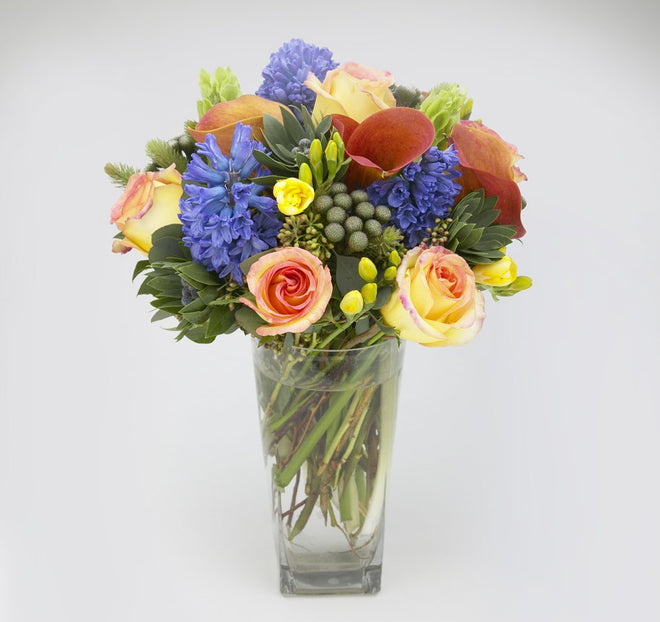
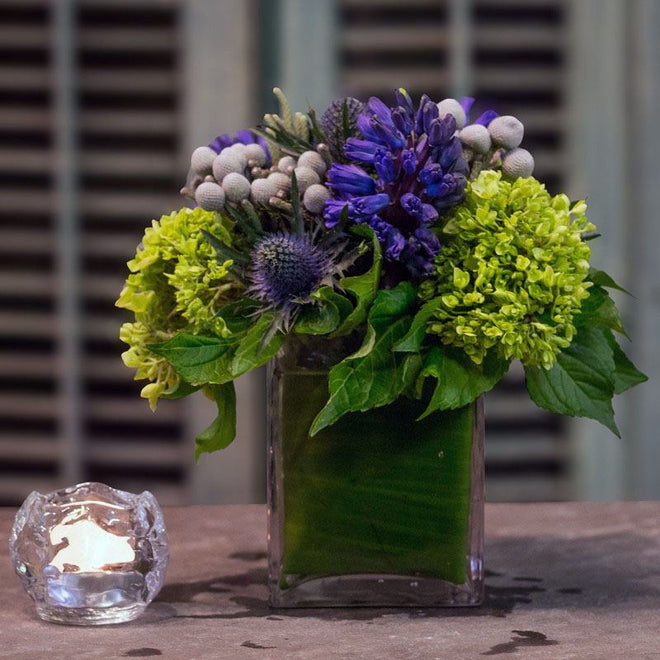
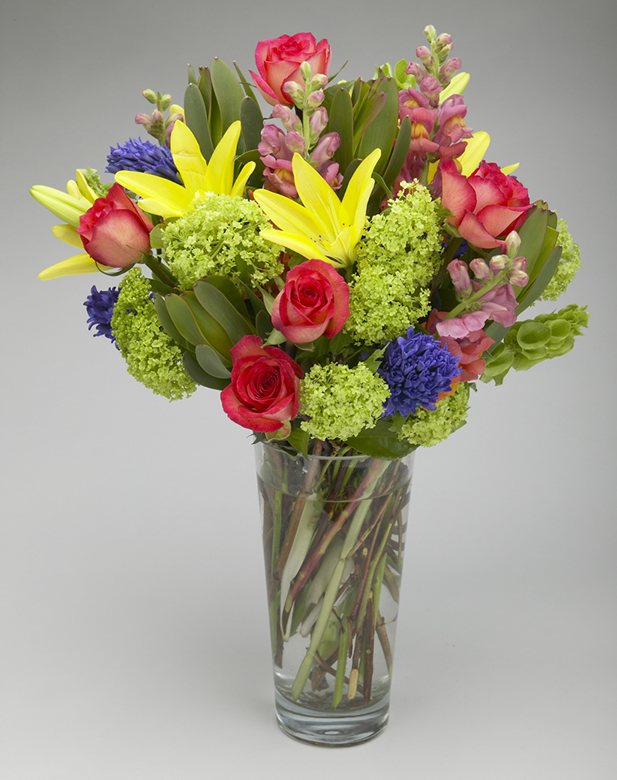
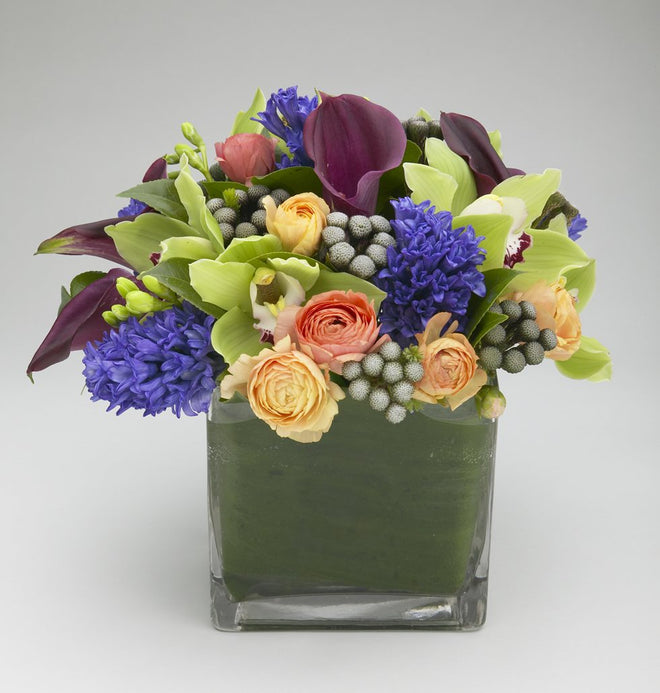
Something not right?
If there's a problem with your order, contact us within 3 days of delivery or pickup with your order number and a photo, and we'll take a look. Call 212-289-1677 · Refund policy
Keep reading
-

Cut flowers
Amaryllis
Amaryllis have tall, hollow stems that can split and curl. Keep the tape band on, support heavy heads, and change the water often as the buds open in turn.
-

Cut flowers
Freesias
Freesias open one bud at a time from the bottom up. Fresh water, flower food and no fruit nearby help every bud open.
-

Cut flowers
Snapdragons
Snapdragons curl toward light if tilted, so keep them upright. Use the flower food, snip faded lower blooms and keep fruit away.


