Cut flower care
How to Care for Cut Freesias
Freesias open one bud at a time from the bottom up. Fresh water, flower food and no fruit nearby help every bud open.

- Vase life4 to 12 days
- WaterTop up daily, fresh water every 2 days
- Where to put themCool spot, away from sun, heat and fruit
- PetsNon-toxic to cats and dogs; may upset stomach (ASPCA)
- Care levelEasy
- SeasonYear-round; naturally spring
Freesias are the small, sweet-smelling flowers that sit along one side of a curved stem like a row of little trumpets. With good care they last about 4 to 12 days in a vase, because the buds keep opening one after another. The one thing that matters most: keep them in clean, fresh water away from fruit, so the young buds at the tip get the chance to open.
When your freesias arrive
- Unwrap the arrangement and check the water level right away. Most of our vase designs are arranged in water, and a warm delivery ride can drink it down.
- Top the vase up with cool, clean tap water and stir in the flower food packet we include.
- Set the vase somewhere cool and out of direct sun, away from radiators, heaters and air-conditioning vents.
- Keep it away from the fruit bowl. Ripening fruit gives off ethylene gas, and freesia buds are sensitive to it.
- Set in green foam? Keep it wet, and don't pull stems out.
If freesias came in a hand-tied bouquet, fill a clean vase with cool water and the flower food, cut about an inch off each stem at an angle with a sharp knife or clean pruners, and put them in water within a minute or two. Freesias dry out quickly, so don't leave them lying on the counter while you find a vase.
Everyday care
- Add fresh water daily. Mixed arrangements drink more than you'd think, especially in a heated apartment.
- Change the water every 2 days or so, or sooner if it looks cloudy. Rinse the vase, refill with fresh water and the rest of the flower food.
- Each time you change the water, trim about half an inch to an inch off the freesia stems with a clean, sharp blade.
- Pull off any leaves that sit below the waterline. They rot and cloud the water.
- Keep the vase in the coolest comfortable spot in the room, not on a sunny south windowsill or a warm TV cabinet.
For the full routine that works for every cut flower, see our guide to making cut flowers last.
Make them last longer
A freesia stem is really a string of buds. The lowest flower opens first and the rest follow toward the tip over the next several days, so a stem can look fresh long after the first bloom has faded. Help that happen:
- Pinch off faded florets. When the bottom flowers turn papery or brown, pinch or snip them off where they meet the stem. The stem looks fresher and the eye goes to the new blooms above.
- Keep ethylene away. Fruit, cigarette smoke and wilting flowers all release ethylene. Florists treat freesias as ethylene-sensitive: it hits the young buds hardest, which may shrivel, drop or never open, and it can also fade the color of open flowers and make their petals look see-through.
- Use the flower food. Freesia buds need the sugars in flower food to open fully with good color. Plain water alone usually leaves the top buds small and pale.
- Keep them cool at night. Warm rooms open freesias faster and shorten their life. If you can, move the vase to a cooler room overnight.
- Skip the home remedies. Sugar, soda, aspirin or a penny in the water don't do the job of real flower food, and sugar alone feeds bacteria.
Common problems
Why aren't the top buds opening?
Usually one of three things: the water is dirty, the flower food has run out, or the vase is near fruit. Change the water, add fresh flower food if you have any left, trim the stems and move the vase away from the kitchen. Very small green buds at the tip often stay closed, even with perfect care. That's normal.
The bottom flowers turned brown. Is the stem finished?
No. That is the natural order of a freesia: the oldest flowers are at the bottom. Remove the brown ones and look at the buds higher up. If they still have color, the stem has more to give.
Why are my freesias drooping?
Freesia stems are thin and lose water fast. Check that the stem ends are actually in water, recut them at an angle and give them fresh, cool water. Stems that wilted after a short dry spell often recover after a fresh cut and a drink of cool water with flower food. Stems that sat dry for long may not come back.
The petals look see-through or are falling. What happened?
Transparent petals and dropping buds are classic signs of ethylene exposure or heat. Move the vase away from fruit and heat. If the whole arrangement arrived looking this way, call us within 3 days of delivery with your order number, the recipient's name and a photo (see our refund policy) and we'll take a look and make it right where we can.
Why do the leaf tips look brown?
Freesia leaves are sensitive to the fluoride in city tap water, which can brown the tips. It is only cosmetic and the flowers are fine. Snip off the brown tips if they bother you, and avoid water from a water softener.
Good to know
- Pets: the ASPCA says freesias are non-toxic to pets, apart from a possible upset stomach if eaten, so keep the vase out of reach. Freesias are often mixed with other flowers, and some of those, like lilies, are dangerous to cats. Check every flower in the vase with our pet-safe flowers guide, and if you think your pet ate something, call your vet or the ASPCA Animal Poison Control Center.
- Scent: freesias are prized for a sweet, citrusy fragrance, and many people buy them for the scent alone. Scent can bother some people in a small hospital room or office, so keep that in mind when sending.
- Pollen: if any freesia pollen gets on fabric, let it dry and lift it off with tape instead of rubbing.
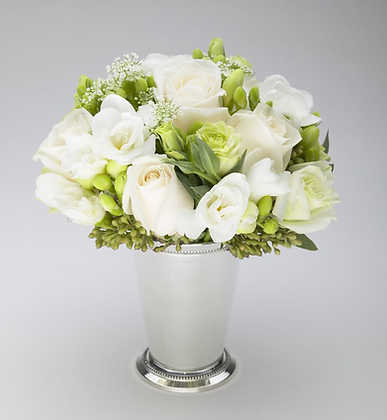
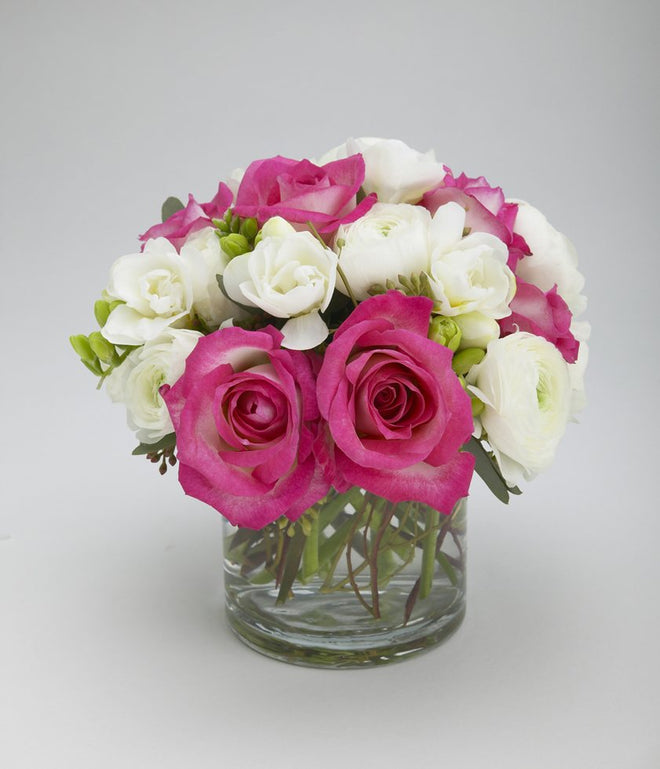
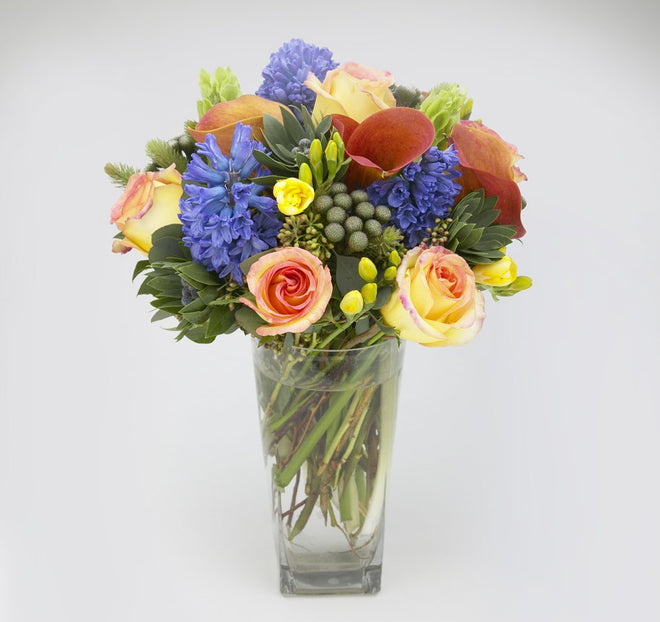
- In our arrangements: you'll find freesia with petite white roses and green berries in Grace, with hot pink roses and white ranunculus in Darling, and as yellow freesia with blue hyacinth, peach roses and rust callas in Medley. Freesias grow in white, cream, yellow, pink, orange, red and purple; for a particular color, ask the shop.
- Season: freesias are spring bloomers in their native South Africa, but greenhouse stems make them available year-round.
- Meaning: freesias are often given for friendship and thoughtfulness.
Our designs with freesias

Something not right?
If there's a problem with your order, contact us within 3 days of delivery or pickup with your order number and a photo, and we'll take a look. Call 212-289-1677 · Refund policy
Keep reading
-

Cut flowers
Snapdragons
Snapdragons curl toward light if tilted, so keep them upright. Use the flower food, snip faded lower blooms and keep fruit away.
-

Cut flowers
Dahlias
Big late-summer blooms on thirsty hollow stems. How to keep dahlias cool and drinking for 4 to 7 days, and what to do when one wilts.
-

Cut flowers
Gerberas
Big cheerful daisies that want shallow, spotless water. How to keep gerbera necks upright and the flowers bright for 5 to 10 days.


