Cut flower care
How to Care for Cut Hydrangeas
Hydrangeas are thirsty and drink through their petals too. Keep the vase full, mist lightly, and soak a wilted head in water to bring it back.

- Vase life5 to 10 days
- WaterTop up daily, fresh water every 2 days
- Where to put themCool room, out of sun and away from heat
- PetsToxic to cats, dogs and horses (ASPCA) · Pet guide
- Care levelModerate
- SeasonMost of the year; antique heads in fall
On this page
Hydrangeas are the big, soft heads that fill out so many of our arrangements, in white, green, blue, pink, purple and deep autumn shades. With good care they usually last about 5 to 10 days in a vase. The one thing that matters most is water: a hydrangea head is huge and loses moisture fast, so keep the vase full and never let the stems go dry.
When your hydrangeas arrive
- Unpack the arrangement right away and set it somewhere cool, away from sun, radiators and heating vents.
- Check the water level. Hydrangeas drink a lot, so top up the vase to near the rim with cool, clean water.
- Add the flower food packet we include, mixed as the packet says. In lab tests by a flower-food maker, hydrangeas kept their firmness and color noticeably longer in flower food than in plain water.
- If a head looks a little soft after the trip, give it a light mist of water over the petals. It will often firm up within a few hours.
- Hydrangeas in green foam dry out quickly, so soak the foam every day.
Hand-tied bouquets come wrapped and are meant for your own vase. Choose a clean vase, fill it with cool water and the flower food, then cut each stem at a sharp angle with a clean knife or pruners, about an inch from the bottom. Strip any leaves that would sit under water and get the bouquet into the vase within a minute or two.
Everyday care
- Refill the vase daily, with a little flower food mixed in if you have some left. A large head can empty a surprising amount of a vase overnight.
- Change the water every 2 days or so, or sooner if it looks cloudy, and add fresh flower food if you have some left.
- When you change the water, trim about an inch off each hydrangea stem with a clean, angled cut.
- Keep the vase cool and out of direct sun. A sunny south window, a radiator in winter or the draft from an air-conditioner will all dry the heads faster. Keep it away from the fruit bowl too; ripening fruit gives off ethylene gas, which makes flowers wilt sooner.
For the full routine that works for every flower in the vase, see our guide on making cut flowers last longer.
Make them last longer
They drink through their heads. Unlike most cut flowers, hydrangeas can take up water through their petals as well as their stems. That is why a hydrangea that looks tired can come back so well. A light mist over the heads once a day helps in dry apartment heat. Keep it light: petals that stay soaking wet for long periods can spot or grow mold.
Full submersion revival. If a head wilts, don't give up on it. Take the stem out, recut it, and lay the whole head face down in a sink or basin of cool or room-temperature water so the petals are fully under. Leave it for 30 minutes to an hour (a very limp head can stay a few hours). Lift it out, shake off the extra water gently, and put it straight back into the vase. Most wilted heads firm up again. See also our guide to reviving drooping flowers.
Woody stems need a clean cut. Hydrangea stems are firm and woody, and a dull blade crushes the water channels inside. Use a sharp knife or clean pruners and make a fresh angled cut. Some florists also make a short vertical split up the stem end; that is optional. Please skip the old advice about crushing stems with a hammer, since crushed tissue rots and can block water.
About alum and boiling water. You may read online that dipping stems in alum powder or boiling water stops hydrangeas wilting. Growers and florists do use hot-water dips and aluminum-based preservatives, but a flower that reaches you already in water doesn't need them. A clean recut, a full vase with the flower food packet we include, and a soak if it droops do the job more safely. Skip the kitchen add-ins too: sugar, soda, aspirin and pennies are no substitute for real flower food.
Common problems
Why did my hydrangea wilt overnight?
Almost always it ran low on water or the stem end sealed over. Top up the vase, recut the stem and try the full submersion revival above. A warm room makes this happen faster, so move the arrangement somewhere cooler.
Why are the petals turning brown or crispy?
Browning edges usually mean the head dried out, often from sun, heat or a heating vent nearby. Pull off the worst florets, mist the head and keep the vase full. Brown papery petals late in the vase life are normal aging.
The water is cloudy. Is that a problem?
Yes. Cloudy water means bacteria, and bacteria clog stems. Empty the vase, rinse it, refill with cool water and flower food, and recut the stems before putting them back.
My hydrangea still won't recover. What now?
Some heads don't come back after a second soak, especially late in their life; remove that stem and enjoy the rest. If flowers arrive looking wrong, contact us within 3 days of delivery or pickup (212-289-1677 or jeromeflorists1@gmail.com) with your order number, the recipient's name and a photo, and we'll take a look and make it right where we can. See our refund policy.
Good to know
- Pets: the ASPCA lists hydrangea as toxic to dogs, cats and horses. Eating it can cause vomiting, diarrhea and depression. Keep arrangements out of reach, and if you think a pet has eaten some, call your vet or the ASPCA Animal Poison Control Center. More in our pet-safe flowers guide.
- Scent and pollen: hydrangeas have little or no scent and shed very little pollen, so they suit offices and hospital rooms where strong fragrance is a concern (check the ward's flower rules first).
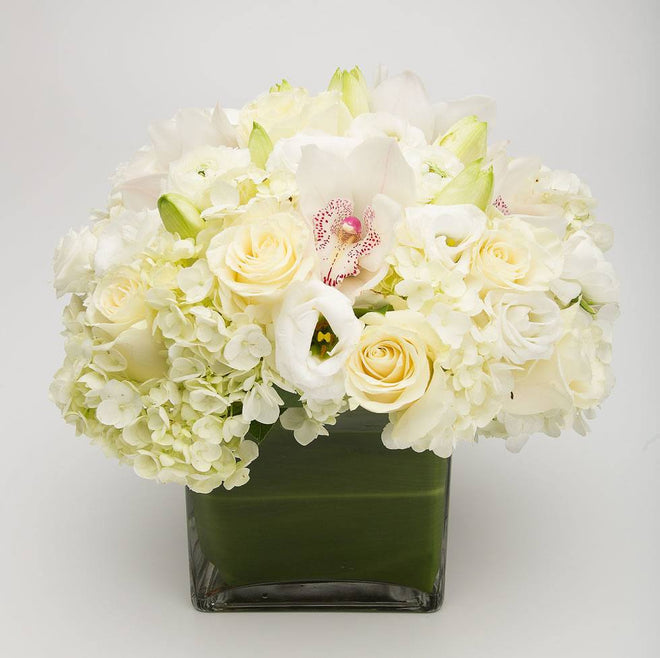
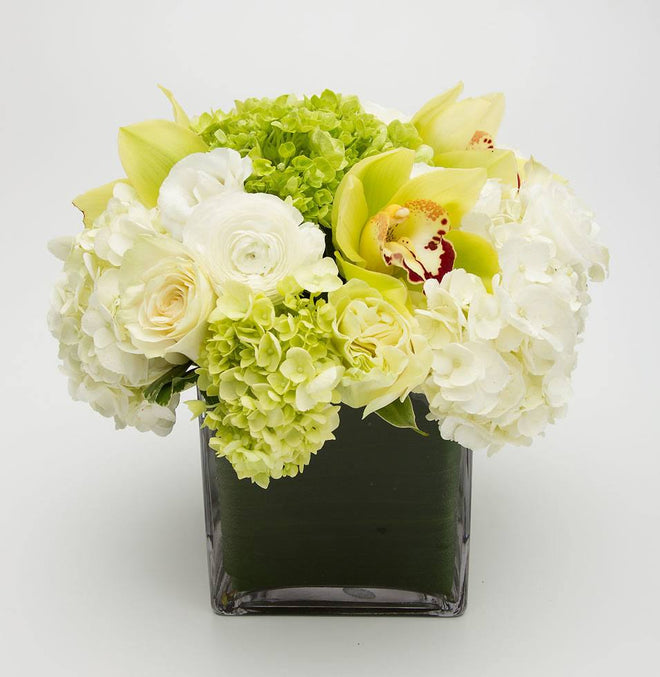
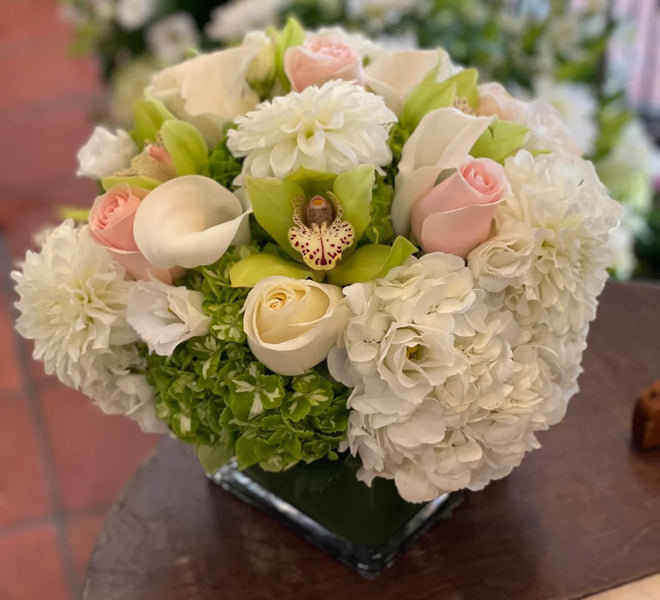
- Colors you may see: white and green hydrangea are in many of our cube and cylinder designs, such as Iridescent, Viridescence and Kakovatos. We also use pink, raspberry, blue and purple heads, and a single-flower arrangement simply called Hydrangeas.
- Antique hydrangeas: these are heads left to mature on the plant until they turn autumn shades of burgundy, green and dusky pink. They feel firmer and a little papery and are often more forgiving in the vase. You'll see them in fall designs; browse our antique hydrangea collection. Care is the same: full vase, fresh cuts, cool room.
- Season: cut hydrangeas are available most of the year, with local garden hydrangeas at their best in summer and antique heads in late summer and fall. Ask the shop what's in.
- Garden plants: if you grow hydrangeas outside, our post on how to prune a hydrangea plant explains when to cut back each type.
Our designs with hydrangeas
Shop all Antique Hydrangea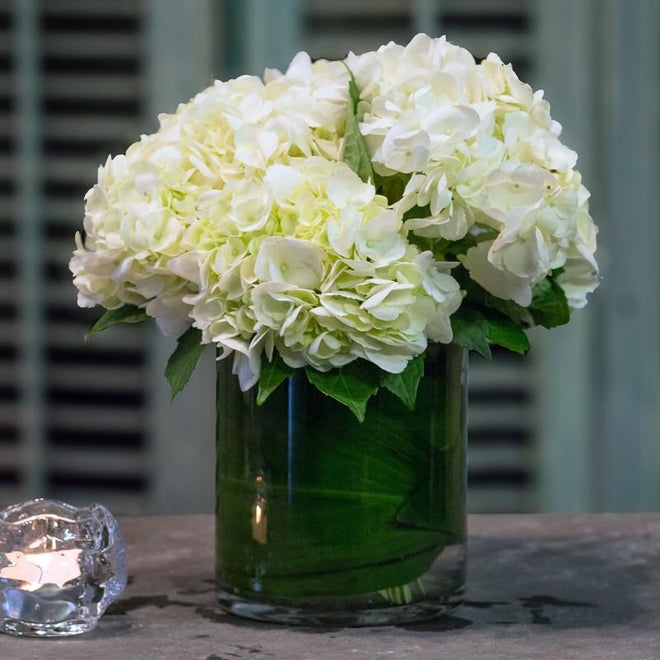
Something not right?
If there's a problem with your order, contact us within 3 days of delivery or pickup with your order number and a photo, and we'll take a look. Call 212-289-1677 · Refund policy
Keep reading
-

Cut flowers
Cymbidium orchids
Cut cymbidium orchids can outlast everything else in the vase. Keep them away from fruit and cold drafts, and leave the center of each bloom alone.
-

Cut flowers
Ranunculus
Soft hollow stems and layers of thin petals that open over days. How to keep ranunculus cool, clean and drinking for 5 to 7 days.
-

Cut flowers
Calla lilies
Callas have soft, water-filled stems. Keep the water clean, trim the stems, pull any slimy ones, and handle the blooms as little as possible.


