Plant care
How to Care for a Succulent Plant
Succulents want bright light and very little water. Water sparingly, let the soil dry completely, and give it your sunniest window in winter.

- How long it lastsLives for years with good care
- WaterOnly when fully dry, a small measured amount
- Where to put themBrightest window, away from radiators
- PetsEcheveria non-toxic; some succulents toxic - ask us
- Care levelEasy
- SeasonYear-round
On this page
A rosette succulent is the easiest living gift we send out: thick, fleshy leaves that store their own water, so it asks for bright light and very little else. Kept in a sunny window and watered sparingly, it can stay handsome for years. The one thing that matters most is not to overwater. Decorative pots and glass planters like ours often have no drainage hole, so any extra water stays inside.
When it arrives
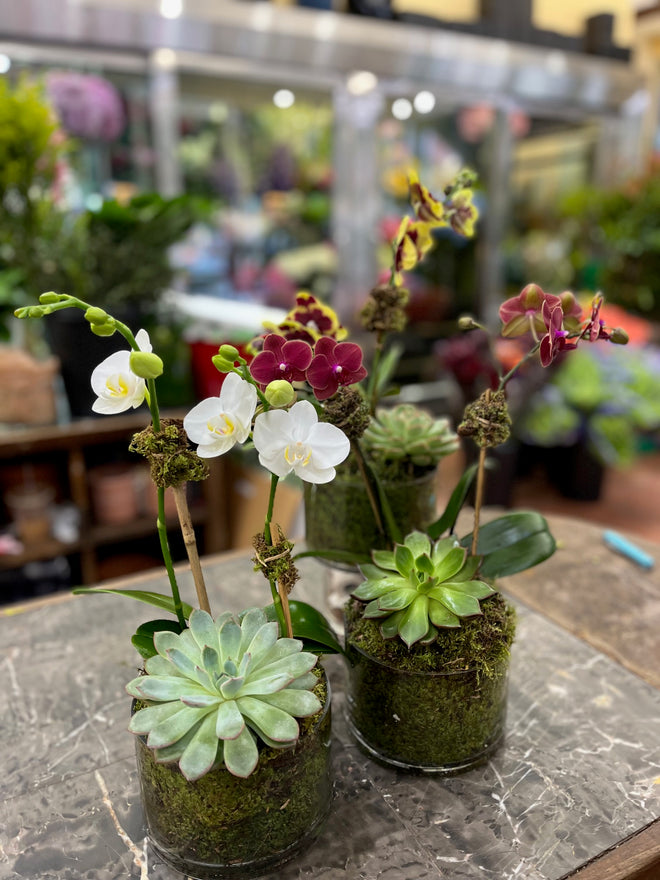
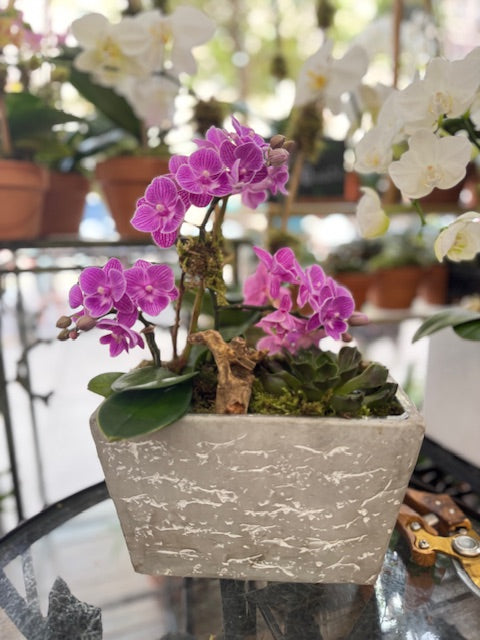
- Unwrap it and set it on a flat, steady surface. Our Succulent Bowl is a rosette succulent sitting on river stones in a glossy pot, and the combination planters pair mini orchids with a succulent in a moss-lined glass cylinder or a stone-look planter.
- Don't water it on day one. It left the shop in good shape, and a succulent is far more likely to suffer from too much water than too little.
- Find its spot: the brightest window you have, close to the glass but not touching it, and away from radiators and air-conditioning vents.
Watering
Succulents like a good drink followed by a long dry spell. Water only when the soil is completely dry, which indoors usually means every two to three weeks, and less often in winter.
- Check first. Slide a finger or a wooden skewer down between the stones into the soil. If you feel any moisture, wait.
- Check the pot. Lift it and look underneath. If there is no hole, or the plant sits in a plastic nursery pot inside the decorative one, water sparingly and tip out anything that collects at the bottom.
- Measure the water. A decorative pot without a drainage hole keeps every drop you pour in, and extra water collects at the bottom where the roots can rot. Pour a small, measured amount slowly onto the soil around the base, enough to moisten the root area, not to fill the pot. For our bowl, a few tablespoons up to about a quarter cup is a sensible starting point; adjust as you learn the plant.
- Keep the rosette dry. Aim between the stones, not into the center of the leaves, where water can sit and cause rot.
- If you overpour, tip the pot gently on its side over the sink, holding the plant and stones in place with your hand, and let the extra water run out.
- No flower food here. The packet we include is for cut flowers in a vase. A succulent needs no feeding in its first months and none in winter. In spring and summer, you can feed it once a month with a succulent or all-purpose houseplant fertilizer mixed at a quarter to half the label strength.
Combination planters. Mini orchids and succulents like different amounts of water, so water each plant to its own needs. A Phalaenopsis orchid in moss wants a small drink when the moss feels nearly dry; check it by touch rather than watering on a fixed schedule. The succulent wants to dry out completely. Give the orchid its water directly onto its own moss, a few tablespoons at a time (the full-size orchid plants get a thorough drink instead; see the orchid guide), and keep water away from the succulent's base. Our orchid plant care guide covers the orchids in more detail.
Light and temperature
- Give it lots of light. Indoors, most succulents want at least six to eight hours of bright light a day, and ten or more is better. A south-facing window is ideal; east or west windows work well too.
- Ease into strong sun. A plant that has been in a dim room can scorch if it goes straight into hot afternoon sun behind glass. Move it closer over a week or so.
- Combination planters are a compromise: bright light, but filtered from harsh midday sun, because orchid leaves burn more easily than succulent leaves. An east window or a spot just back from a south window suits both.
- NYC winter. Short, gray days are the hardest time for a succulent in an apartment. Move it to your sunniest window, turn it every week or two so it grows evenly, and water even less. A small LED grow light helps if your windows face a courtyard or another building.
- Watch the heat and the cold. Normal room temperatures are fine, roughly 55 to 75 degrees. Keep it off a radiator cover and away from steam heat, and don't leave the leaves pressed against an icy window pane overnight.
After the flowers fade
A rosette succulent is grown for its leaves, and it may never flower indoors. If it does send up a tall flower stalk, enjoy it, then cut the stalk off at the base once the flowers dry. Pull away the lowest leaves when they shrivel; that is normal as the rosette grows.
In the combination planters, the mini orchids bloom for weeks and then drop their flowers. When they do, you can keep the orchids growing as plants and, in spring, move them and the succulent into separate pots so each gets the watering it likes. Repot the succulent into a pot with a drainage hole and a fast-draining cactus mix, and it will be much easier to keep for years.
Common problems
Why are the leaves soft, yellow or see-through?
That is almost always too much water. Stop watering, tip out any water pooled in the pot, and let it dry for a couple of weeks. If the stem at the soil line has turned black and mushy, the roots have likely rotted.
Why are the leaves wrinkled?
Wrinkled or shriveling lower leaves mean the plant is thirsty. Give it a measured drink. If only the very bottom leaves dry up while the center looks plump, that is normal aging.
Why is it stretching and turning pale?
It needs more light. A succulent that reaches toward the window, with wide gaps between leaves, is not getting enough sun. Move it to a brighter window or add a grow light. The stretched part won't shrink back, but new growth will be compact.
Something looked wrong when it arrived. What should I do?
Contact us within 3 days of delivery or pickup with your order number and a photo, as our refund policy explains, and we'll take a look and make it right where we can.
Good to know
- Pets. Succulents vary. Several Echeveria species, the classic rosette succulents, are listed by the ASPCA as non-toxic to dogs, cats and horses, and so are Phalaenopsis orchids. Other popular succulents are not: the ASPCA lists jade plant and aloe as toxic to dogs, cats and horses, and kalanchoe as toxic to dogs and cats. We use a mix of succulents depending on what comes in, so if you have pets, call the shop and we'll tell you which one is in your planter; keep plants where pets can't chew them, and call your vet or the ASPCA Animal Poison Control Center if you think a pet ate part of one. See our pet-safe flowers guide.
- Keep the stones. The river stones are decorative and also keep the rosette off damp soil. Leave them in place.
- Year-round. Succulents make a good gift in any season, especially for someone who travels.
- Browse more plants in our orchids and plants collection.
Our designs with succulents
Shop all Orchids & Plants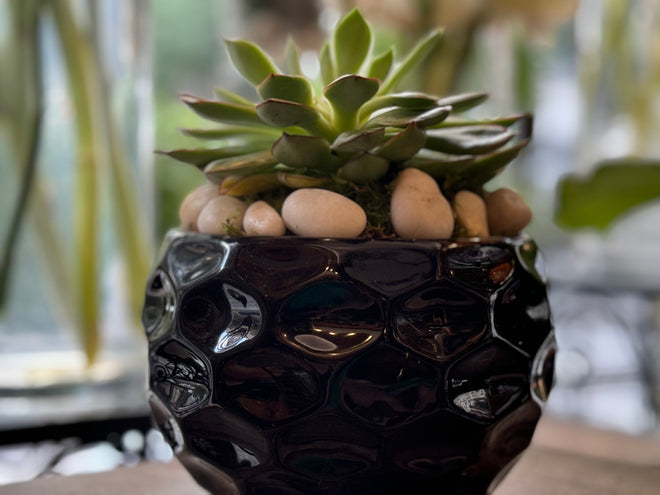
Something not right?
If there's a problem with your order, contact us within 3 days of delivery or pickup with your order number and a photo, and we'll take a look. Call 212-289-1677 · Refund policy
Keep reading
-

Plants
Poinsettia
Poinsettias are tropical: keep them warm and out of drafts, water when the surface is dry, and let the foil drain. Plus the truth about the "deadly" myth.
-

Plants
Orchid plants
Water your moth orchid when the moss is nearly dry, drain it well, give it bright indirect light, and it can bloom for months and flower again.

