Plant care
How to Care for Orchid Plants
Water your moth orchid when the moss is nearly dry, drain it well, give it bright indirect light, and it can bloom for months and flower again.

- How long it lastsBlooms 2 to 3 months
- WaterHalf a cup of lukewarm water every 5 to 7 days
- Where to put themBright indirect light, away from heat and drafts
- PetsNon-toxic to cats and dogs (ASPCA)
- Care levelEasy
- SeasonYear-round
On this page
Our orchid plants are Phalaenopsis, the moth orchid, and they are one of the easiest long-lasting gifts we send. With good care the flowers often last two to three months, sometimes longer. The one thing that matters most is water: give them about half a cup of lukewarm water every 5 to 7 days, and never let the roots sit in water.
When it arrives
- Remove any sleeve or wrapping gently, holding the pot, not the stem.
- Leave the bamboo stake and raffia ties in place. They hold the flower spike steady, and a heavy spike can snap without them.
- Look at the pot. Our orchids come in a terra cotta pot with moss over the top, or, if you chose the upgrade, in a glass or matte container, also dressed with moss to hide the roots. The terra cotta pot has a drainage hole; the glass and matte containers don't. It matters for watering, below.
- Find it a spot with bright, indirect light, away from radiators, heating vents and air-conditioner drafts.
- Feel the moss. If it is still damp, don't water yet; wait until it is nearly dry.
Watering
Our glass and matte containers have no drainage hole, so extra water collects at the bottom where you can't see it. Roots that stand in water rot, and overwatering is the most common way orchids are lost.
- How much and how often: about half a cup of lukewarm water every 5 to 7 days, poured slowly over the moss, not into the center of the leaves. Give it a little more if the room is hot, for example in radiator season or a sunny apartment in summer. If the moss still feels damp on watering day, wait a day.
- In the terra cotta pot: water it over the sink or on a saucer and let the extra run out of the drainage hole. Empty the saucer so the pot is not left standing in water.
- In a glass or matte container: there is no drainage hole, so stick to the half cup and pour slowly. If you see water pooling at the bottom, tip the extra out carefully while holding the plant in place.
- Water in the morning so the leaves dry by evening. If water sits in the crown (where the leaves meet), blot it with a paper towel.
- Don't let the plant dry out completely either. Phalaenopsis have no bulbs to store water, only their leaves.
- We don't recommend the ice cube method. The half cup of lukewarm water above does the job better.
Light and temperature
- Bright, indirect light is ideal: near an east window, or a few feet back from a sunny south or west window. A sheer curtain helps.
- Keep it out of hot direct sun, which can scorch the leaves.
- Room temperatures that suit you suit the orchid: roughly 65 to 80 degrees during the day. Keep nights above about 60 degrees most of the year; a few weeks of cooler fall nights help it bloom again (see below).
- Avoid sudden swings. Cold drafts from a window in winter, blasts from steam heat and air-conditioning can all make buds drop.
After the flowers fade
When the last flower drops, the plant is resting, not dying. Keep watering and keep it in good light. You have two choices for the old spike.
- For a quicker, smaller rebloom: if the spike is still green, cut it just above the second node (the small bumps along the stem) below where the lowest flower was. A new branch of flowers may grow from that node.
- For a stronger plant: cut the spike off at the base. The plant puts its energy into roots and leaves and sends up a fresh spike later. If the spike has turned brown or yellow, always cut it at the base.
- Cooler nights help: several weeks of nights around 55 to 60 degrees in the fall, with warmer days, encourage a new spike.
- Feed lightly: while it grows new leaves, a balanced orchid or houseplant fertilizer at half strength once or twice a month is plenty.
- Repot after flowering: every one to two years, or when the moss breaks down and stays soggy, move it into fresh orchid bark in a pot with drainage holes. Trim only roots that are brown and mushy. Firm, silvery or green roots are healthy.
Common problems
Why are the leaves yellow or soft?
One lower leaf yellowing now and then is normal aging. Several soft, yellow leaves, or mushy brown roots, usually mean too much water. Check that nothing is pooling in the bottom of the pot and let the moss dry more between drinks.
Why are the buds falling off before they open?
Bud drop usually comes from a change: a cold draft, a hot radiator, very dry air, moving the plant, or letting it dry out or stay soggy. Ripening fruit gives off ethylene gas, which also makes buds drop, so keep the plant away from the fruit bowl and the gas stove. Find it a steady spot and keep watering on schedule.
The roots are growing out of the pot. Is that bad?
No. Phalaenopsis grow aerial roots naturally. Leave them alone; they can take up moisture from the air.
The leaves are wrinkled and limp. What happened?
The plant is thirsty, or its roots have rotted and can't drink. Look at the roots: firm and pale means water more often; brown and mushy means repot in fresh bark after trimming the dead roots.
Something is wrong with my orchid on arrival.
Call or email the shop within 3 days of delivery with your order number and a photo, as our refund policy explains, and we'll take a look and make it right where we can.
Good to know
- Pets: the ASPCA lists Phalaenopsis (moth orchid) as non-toxic to cats, dogs and horses. That listing covers the orchid only; if your planter includes a succulent, the succulent has its own pet notes in our succulent care guide. If you are worried about anything your pet chewed, call your vet or the ASPCA Animal Poison Control Center. See our pet-safe flowers guide.
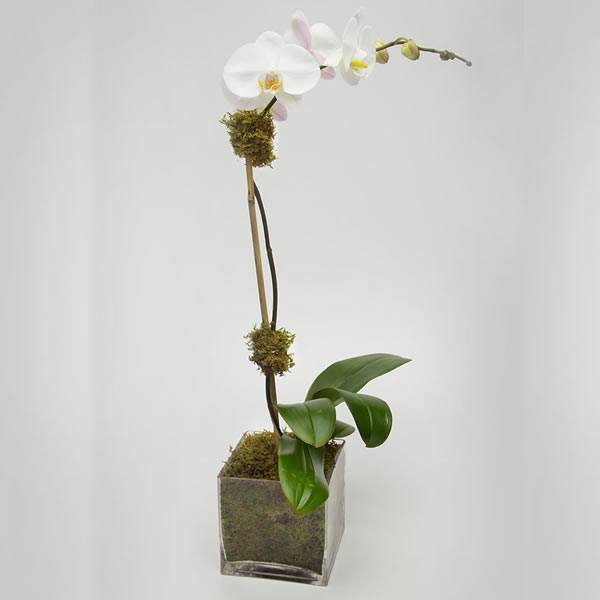
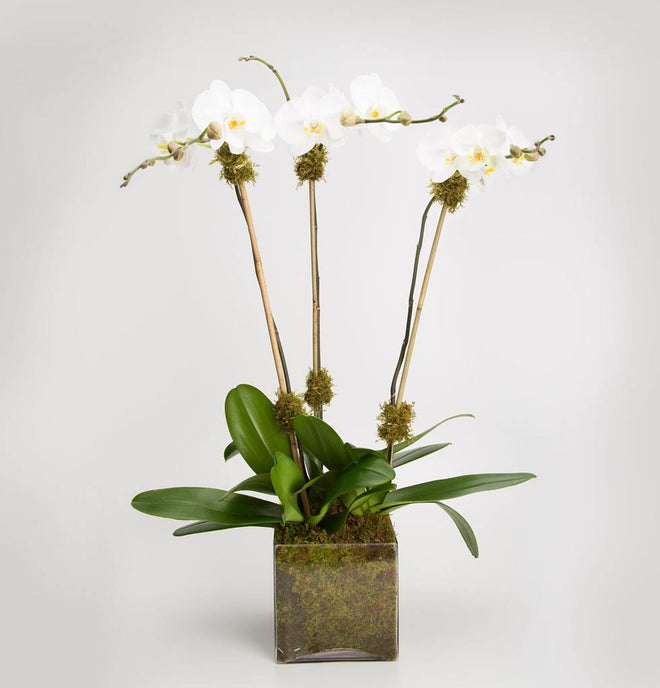
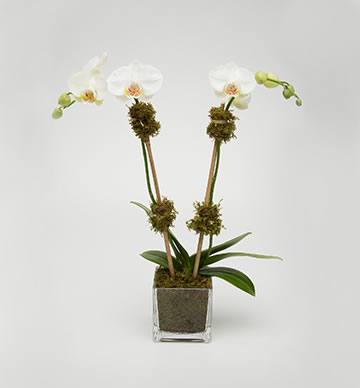
- Which orchid do you have? Our Orchid, Double Orchid and Triple Orchid have one, two or three stems; the Orchid and Triple Orchid come in white, yellow or purple and pink. The Mini Orchid and Mini Double Orchid are smaller versions and dry out a little faster. Our planters combine several orchids, and some add a succulent.
- Orchid with a succulent: water the orchid as above and keep water off the succulent as much as you can. Our succulent care guide explains why they like it drier.
- Cut orchids are different: the orchid blooms in our vase arrangements are cut stems, usually cymbidiums. See our cymbidium orchid care guide for those.
- No scent or pollen mess: most moth orchids have little or no fragrance and drop no pollen, which makes them a good choice for offices and bedside tables.
- Season: moth orchids are grown year-round in greenhouses. See all our orchids and plants, or call the shop to ask about colors.
Our designs with orchid plants
Shop all Orchids & Plants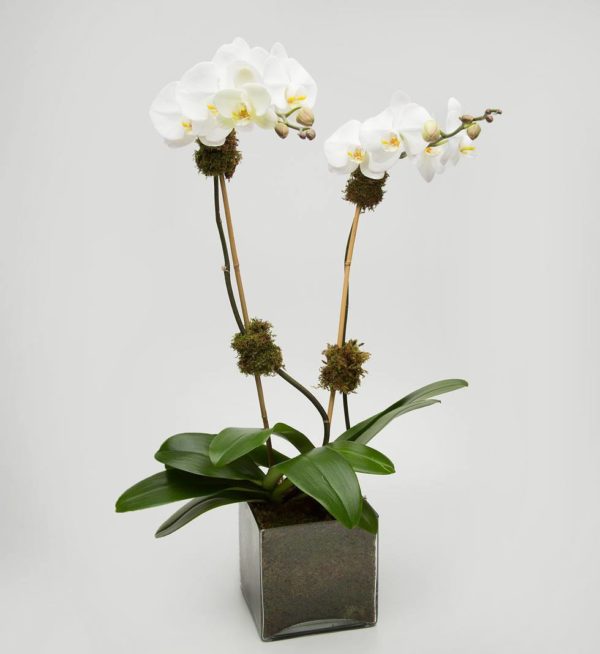
Something not right?
If there's a problem with your order, contact us within 3 days of delivery or pickup with your order number and a photo, and we'll take a look. Call 212-289-1677 · Refund policy
Keep reading
-

Plants
Succulents
Succulents want bright light and very little water. Water sparingly, let the soil dry completely, and give it your sunniest window in winter.
-

Plants
Poinsettia
Poinsettias are tropical: keep them warm and out of drafts, water when the surface is dry, and let the foil drain. Plus the truth about the "deadly" myth.

